





“If the house of Oduduwa shakes, the walls of all Yoruba towns will crack.” — Anonymous Yoruba Elder
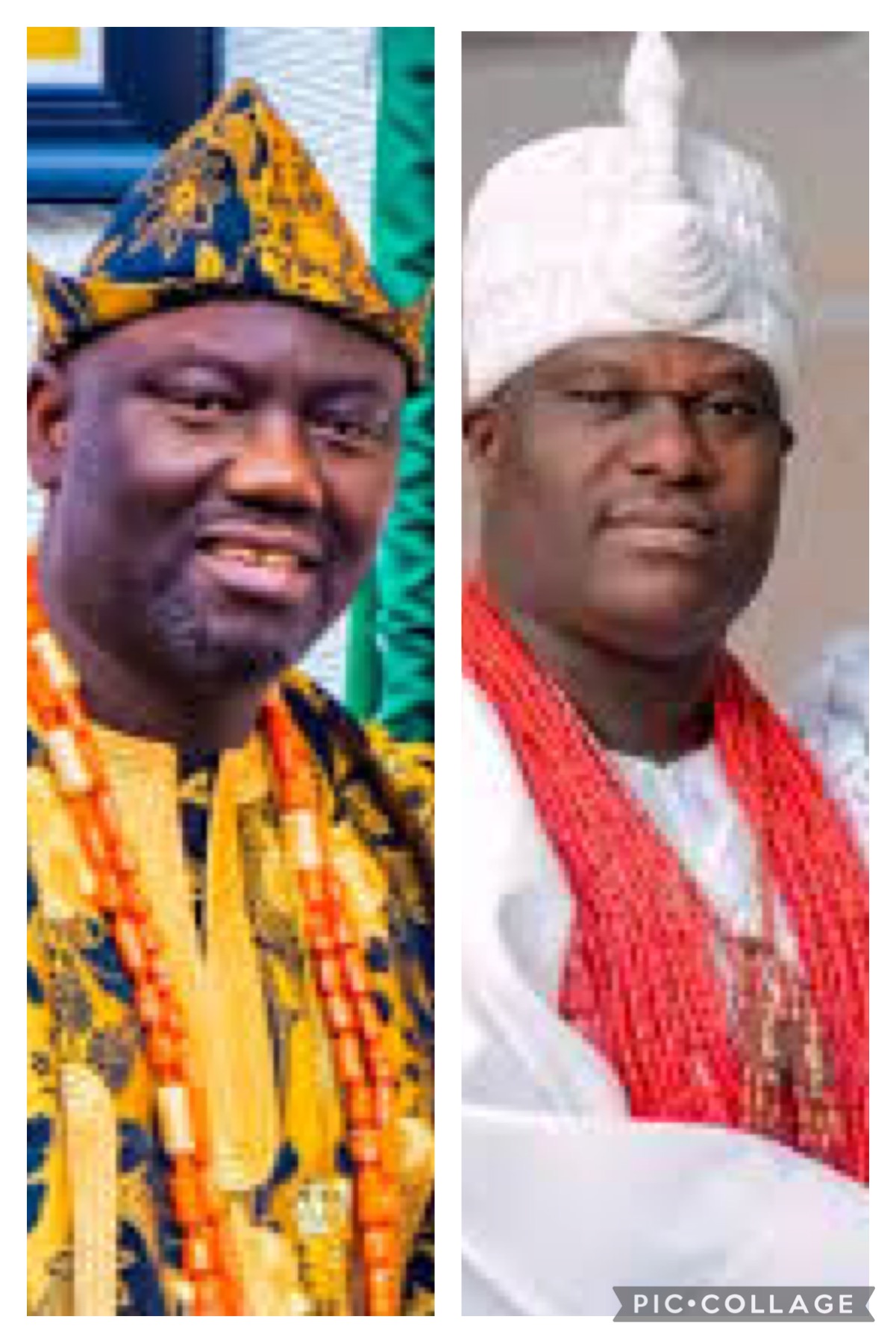
A silent storm brews in the Yoruba traditional leadership sphere—once again reopening centuries-old questions of spiritual primacy and political authority. The recent controversy between the Ooni of Ife, Oba Adeyeye Ogunwusi, and the Alaafin of Oyo, Oba Abimbola Owoade, over the conferral of a chieftaincy title has triggered waves of debate, identity introspection, and appeals for unity across Yorubaland.

A New Title, an Old Dispute
In July 2025, the Ooni of Ife conferred the title “Okanlomo of Oodua” upon Ibadan-based businessman Dotun Sanusi—a move widely celebrated in some circles but deeply contentious in others. Within days, the Alaafin of Oyo issued a 48-hour ultimatum demanding the title be withdrawn.
The Alaafin argued that the title carried weight and historical connotation linked to Yorubaland as a whole—an authority he claimed exclusively belonged to his throne. Citing a Supreme Court judgment as backing, the Alaafin deemed the Ooni’s action a breach of traditional boundaries and protocol.
The Aare Ona Kakanfo Steps In
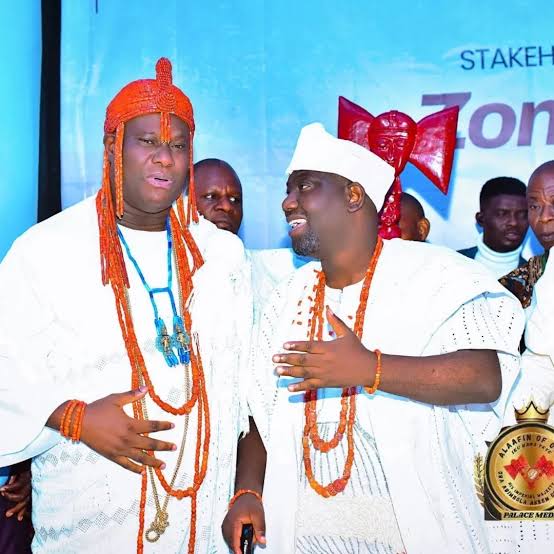
Caught in the crossfire is Iba Gani Adams, the 15th Aare Ona Kakanfo of Yorubaland, a title historically bestowed by the Alaafin but widely acknowledged across the Yoruba nation. Gani Adams clarified that Sanusi was titled Okanlomo of Oodua, not Okanlomo of Yorubaland—a linguistic nuance he believes was lost in translation and media frenzy.
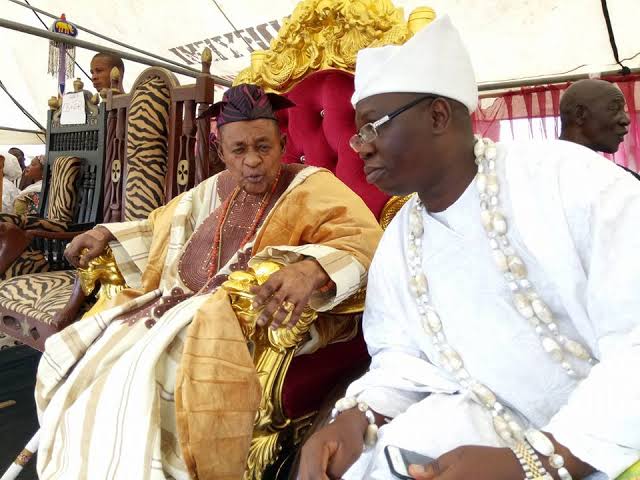
In his mediatory role, Adams urged both royal fathers to “remember their roles as custodians of culture and unity.” He has since opened backchannel reconciliatory efforts with both palaces, enlisting Yoruba elders, religious leaders, and sociocultural organizations to help mend the fissures.
“This is not about titles. It is about power, legacy, and who gets to speak for the soul of the Yoruba people.”
Viral Protocols and Public Perception
Beyond titles, recent public events have fed the perception of rivalry:
A viral video in April 2025 showed the Ooni approaching the Alaafin at a public event while the latter remained seated. To many, this was seen as disrespectful—a snub breaking royal protocol.

At a West African Economic Summit in Abuja, the two monarchs reportedly maintained an icy distance throughout, prompting calls for reconciliation from civil society groups.
These moments were widely shared on social media, intensifying public discourse around status, respect, and historical legitimacy within Yoruba monarchy.
Deep Roots: Spiritual vs Political Authority:
To fully understand the friction, one must delve into history. Ile-Ife is considered the spiritual and ancestral cradle of the Yoruba people—home of Oduduwa, the progenitor of the Yoruba race. The Ooni, as custodian of this heritage, holds immense spiritual clout.
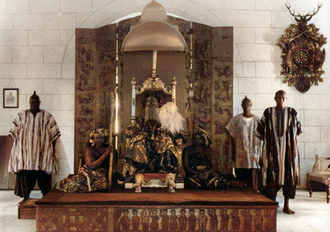
Oyo, on the other hand, rose as the seat of the Oyo Empire, dominating Yorubaland politically and militarily for centuries. The Alaafin, historically, was the imperial monarch and the military commander-in-chief, appointing the Aare Ona Kakanfo as a powerful war general.

“History is not just what happened—but who remembers it best, and with what purpose.”
While both stools hold deep cultural and spiritual relevance, the colonial and post-colonial distortions of chieftaincy systems have blurred lines of hierarchy—fuelling modern-day power tussles and ego-driven interpretations.
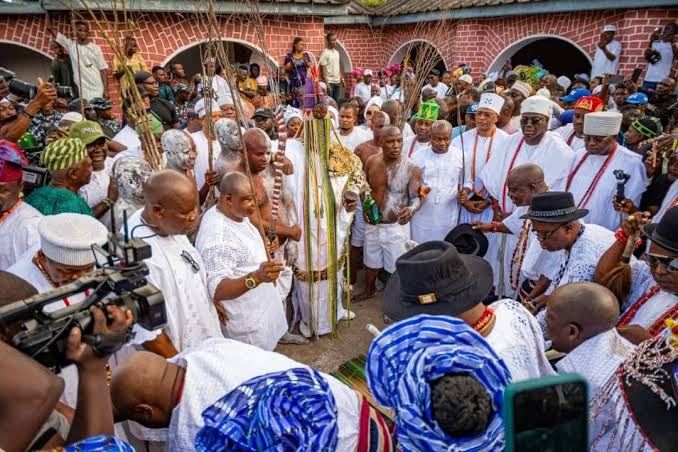
Unity Calls Grow Louder
As tension simmered, voices of reason grew louder:
The Yoruba Council Worldwide warned against further erosion of tradition and urged monarchs to model unity.
The International Council for Ifa Religion and TRAWSO (Traditional Religion Worshippers Stakeholders Organisation) emphasized reconciliation, noting that disunity among traditional leaders could embolden cultural erosion.
Gani Adams warned bloggers and media outlets to avoid provocative comparisons, stating:
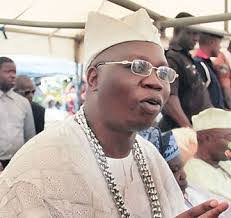
“This debate about who is senior among Yoruba Obas is unnecessary and damaging.”
What This Moment Means for Yorubaland
This isn’t just a disagreement over who can give a title—it is a cultural inflection point. As Yorubaland navigates issues of insecurity, economic marginalization, and generational disconnect, unity among traditional rulers becomes not just symbolic—but strategic.
If mishandled, this clash could deepen tribal mistrust, dilute cultural prestige, and embolden those outside the culture to trivialize Yoruba royal institutions.
Conclusion: The Path Forward:
There are no victors in a house divided. The Ooni and Alaafin, as symbols of Yoruba dignity and continuity, must rise above personal prestige and reassert a collective purpose—preserving the heritage, dignity, and unity of the Yoruba nation.
Are Ona Kakanfo’s mediatory efforts offer hope. But lasting peace will require restoring mutual respect, revisiting history with humility, and embracing a new model of shared leadership rooted not in titles, but in responsibility.
Editor’s Note:
This edition of SagebitsOnline brings you an in-depth analysis of a growing rift that goes beyond titles and ceremonies—it touches the very heart of Yoruba identity. In these complex times, we believe it’s crucial to tell stories that remind us where we come from, and how we can move forward—together. We thank our readers for staying engaged with the deeper questions of culture, power, and unity.
Read, Like and share.








Leave a comment