


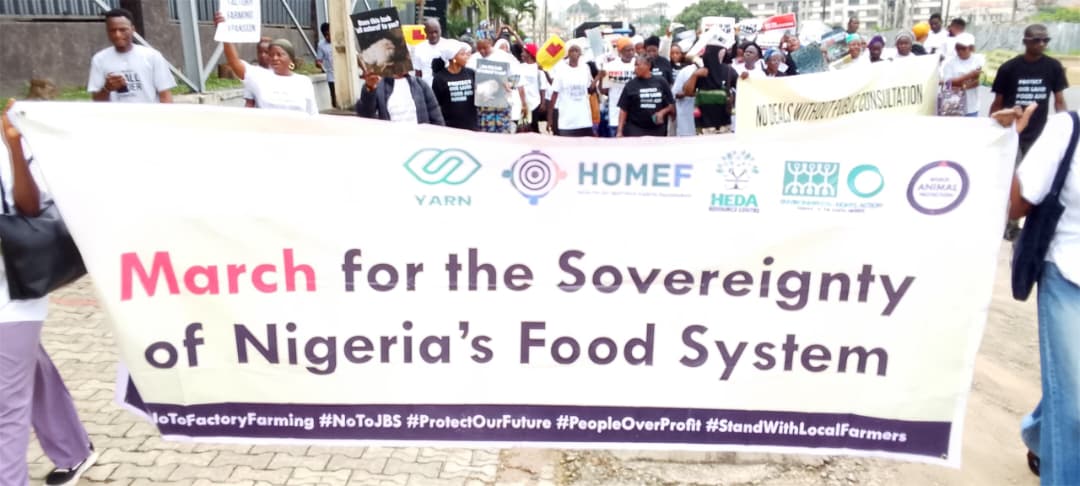
A coalition of civil society organisations, environmental advocates, farmer groups, and youth organisations has called for the immediate suspension of the proposed $2.5 billion industrial livestock investment by Brazilian meat giant JBS in Nigeria.
The coalition made the call on Tuesday during a sensitisation rally in Ibadan, Oyo State.
The group demanded the immediate disclosure of the agreement and an independent assessment of its implications for Nigeria’s food security, environment, and rural economy. It warned that proceeding with plans to establish six industrial livestock facilities across Nigeria without adequate public scrutiny could undermine food sovereignty, threaten the livelihoods of smallholder farmers, and expose host communities to environmental and public health risks.
The coalition said Nigeria’s food system was at a defining moment and that decisions taken today on agriculture and food production would shape environmental sustainability, public health, rural livelihoods, and food sovereignty for generations to come.
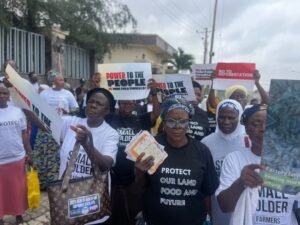
It said the Federal Government had reportedly signed a memorandum of understanding (MoU) with JBS and pledged favourable economic, sanitary, and regulatory conditions to facilitate the investment, while some state governments had indicated their willingness to host components of the project.
Although acknowledging the importance of attracting investment into Nigeria’s agricultural sector, the coalition insisted that a project capable of significantly reshaping the country’s food production system must be subjected to transparency, scientific scrutiny, independent environmental assessments, and meaningful public participation before implementation could proceed.
Speaking at the rally, the project manager of the Youth in Agroecology and Restoration Network, Olawuyi Seyi, said Nigerians had the right to know the terms of the proposed investment and the commitments being made by the government on their behalf.
“Nigerians have a right to know the commitments being made on their behalf, particularly when an investment of this scale could affect our land, food systems, environment and rural livelihoods,” he said.
Olawuyi expressed concern about the potential land requirements of the project, citing reports that Niger State had pledged approximately 1.2 million hectares for livestock investment.
He said the reported allocation raised critical questions about land governance, the protection of community rights, biodiversity conservation, and the future of smallholder agriculture, particularly if large expanses of land were committed to industrial livestock production.
The coalition argued that the proposed investment could have far-reaching consequences for millions of smallholder farmers who produce a substantial proportion of Nigeria’s food. It warned that agricultural policies should strengthen local food production rather than undermine existing farming systems and rural livelihoods.
It also raised concerns about the environmental record of JBS and other industrial meat corporations, citing international investigations that have linked the sector to deforestation, significant greenhouse gas emissions, labour and human rights concerns, as well as environmental and governance controversies in countries where the companies operate.
The coalition said these concerns made it imperative for the Nigerian government to establish adequate safeguards and ensure that the proposed project met the highest standards of environmental protection, corporate accountability, and respect for human rights.
It further questioned whether the investment would adequately address Nigeria’s domestic food and nutrition needs, expressing concern that a significant proportion of the anticipated production might be destined for export markets rather than local consumption.
According to the coalition, the possibility of prioritising external markets over domestic needs raised fundamental questions about whether the investment would strengthen Nigeria’s food security or reinforce a production model that placed commercial interests ahead of national food sovereignty.
The coalition maintained that the government must demonstrate how the project would contribute to affordable food supplies, improve nutrition, create sustainable rural employment, and support local farmers before committing public resources, land, or regulatory concessions to the investment.
Also speaking at the rally, the executive director of Whole Planet Initiative, Magret Adebukola Adekola, urged the government not to proceed with the project without consulting farmers, host communities, and other relevant stakeholders.
“Transparency and meaningful public participation must not be optional. Communities, farmers, civil society organisations and other stakeholders must have access to relevant information and the opportunity to influence decisions before implementation begins,” she said.
Adekola disclosed that the coalition had submitted requests under the Freedom of Information (FOI) Act to relevant federal institutions and participating state governments, seeking access to the project agreement and other documents, but had yet to receive substantive responses.
According to the coalition, the requests covered the MoU, project implementation framework, feasibility studies, environmental and social impact assessments, land allocation arrangements, investment incentives, and other agreements relating to the proposed investment.
It said the continued absence of substantive responses had prevented citizens, independent researchers, and affected communities from adequately examining the project’s potential economic, environmental, public health, and social consequences.
The coalition argued that the failure to make the documents available undermined democratic accountability and public confidence. It insisted that transparency should be regarded as a condition for responsible investment rather than an obstacle to economic development.
It also expressed concern that there was no publicly available evidence demonstrating that comprehensive Environmental and Social Impact Assessments (ESIAs) had been completed or that meaningful consultations had been conducted with civil society organisations working on food systems in Nigeria.
The coalition said no further steps should be taken towards implementation until the relevant documents had been disclosed, independently reviewed, and subjected to public scrutiny.
It stressed that consultations must not be reduced to a procedural exercise conducted after major decisions had already been taken. It insisted that farmers, pastoralists, women, youth organisations, environmental experts, public health professionals, indigenous peoples, independent researchers, and affected communities must be given sufficient time and access to information to influence the outcome.
The coalition consequently called on the Federal Government and participating state governments to suspend further implementation of the proposed project until all relevant documents had been made public and independently reviewed.
It demanded the immediate publication of the MoU, feasibility studies, project implementation frameworks, ESIAs, land allocation agreements, investment incentives, and other documents connected with the proposed investment.
It also urged the authorities to respond without further delay to all outstanding FOI requests in accordance with the provisions of the Freedom of Information Act and to conduct comprehensive, independent, and publicly accessible environmental and social impact assessments before granting further approvals or commencing implementation activities.
Other demands included meaningful consultations with affected communities and relevant stakeholders, stronger safeguards against environmental degradation and violations of labour and human rights, and measures to ensure that multinational corporations operating in Nigeria were held to appropriate standards of environmental and corporate accountability.
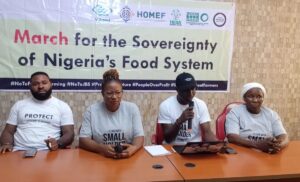
The coalition further urged the government to prioritise investments in agroecology, resilient local food systems, and sustainable farming practices that would protect and improve the livelihoods of smallholder farmers.
It maintained that Nigeria’s agricultural investment policies should be assessed not only by the amount of capital attracted but also by their contributions to domestic food availability, environmental sustainability, public health, employment, and the economic security of farming communities.
Despite its demand for suspension, the coalition clarified that it was not opposed to foreign investment or the development of Nigeria’s agricultural sector.
Rather, it said it supported investments that were transparent, accountable, environmentally responsible, and consistent with the country’s long-term development priorities.
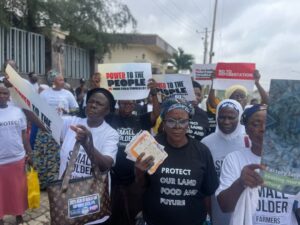
The coalition urged the Federal Government to disclose all documents relating to the proposed JBS investment, address pending information requests, and initiate an open and inclusive consultation process before making further commitments.
It insisted that decisions with the potential to reshape Nigeria’s food system, land use, and rural economy must not be negotiated behind closed doors. It added that the country’s food future should be guided by democratic participation, food sovereignty, environmental integrity, and public accountability.









Leave a comment