





In the wake of the passing of His Royal Highness Oba Sikiru Kayode Adetona, Ogbagba II, the Awujale of Ijebu land, the Adeodu and Okuyadewo royal families have issued a clarion call for unity, truth, and historical justice in the process of kingship succession. The revered monarch’s death has plunged Ijebu land into mourning, prompting deep reflection on tradition and leadership.

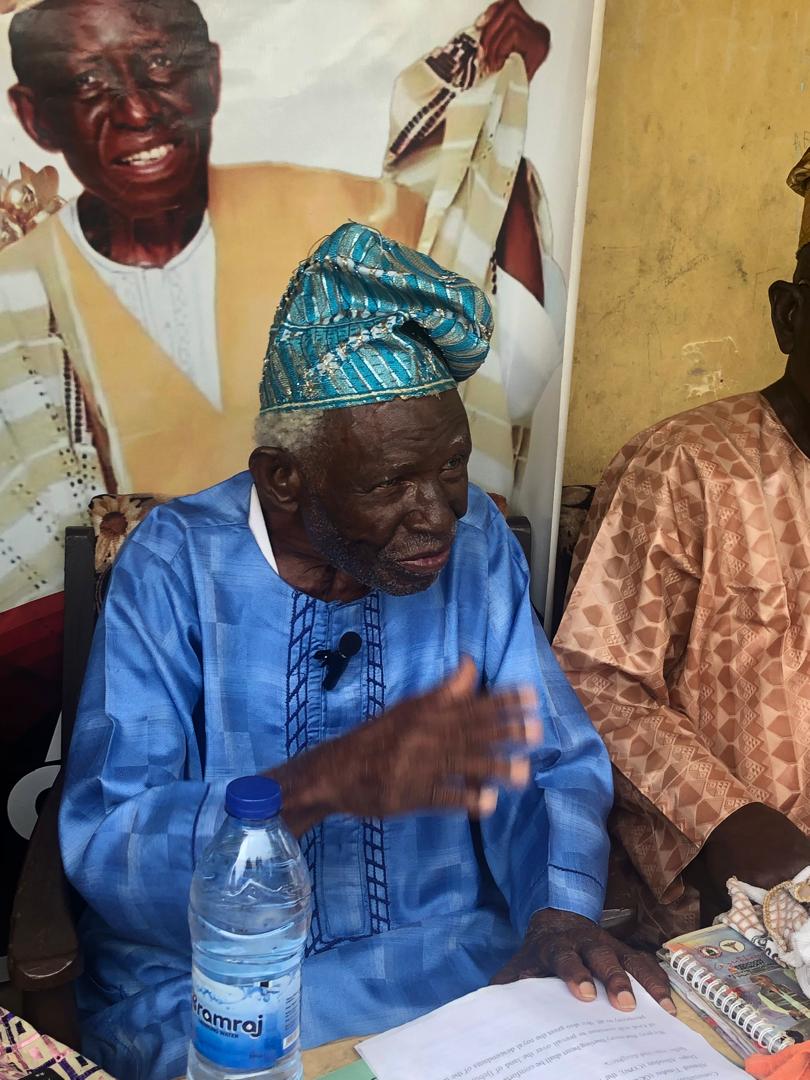
At a solemn press conference, Prince Adenuga Odueke, the 100-year-old Olori Ebi (family patriarch) of the Fusengbuwa ruling house, addressed the media and the people of Ijebu. Representing the eldest branches of the Fusengbuwa lineage—Adeodu and Okuyadewo—Prince Odueke extended condolences to President Bola Ahmed Tinubu (GCON), Ogun State Governor Prince Dapo Abiodun (CON), the Anikilaya family, and all sons and daughters of Ijebu land, both at home and in the diaspora.
“We pray that every hurting heart shall be comforted,” he said, “and that the peace of God continues to reign in Ijebu land, bringing enduring prosperity to all.”
Recognizing the four gazetted ruling houses—Gbelegbuwa, Anikilaya, Fusengbuwa, and Fidipote—Prince Odueke emphasized the need for unity among royal descendants and reaffirmed the time-honored principle that leadership within the Fusengbuwa house is determined by seniority in age. He firmly rejected recent attempts by individuals seeking to distort historical facts and assert illegitimate claims to leadership within the family.
“In our family, the rule is clear: the eldest living member becomes the Olori Ebi. Any self-appointed claim outside this custom is without foundation and is not recognized by the Adeodu and Okuyadewo descendants,” he stated.

Prince Odueke offered a detailed historical account of the early Fusengbuwa lineage. According to oral tradition, Oba Fusengbuwa faced challenges in producing heirs despite being married to seventeen wives. Guided by the Ifa oracle, he took one of his late father’s wives as the eighteenth, Efunsepe, in marriage. She bore his first two children: Adesina Adeodu, a male, and Okuyandewo, a female. These children were raised in Italero, where Efunsepe was relocated due to discord among co-wives in Agunsebi. It wasn’t until five years later that the king’s other wives began to bear children, ultimately producing six more, making eight in total.
“This makes Adeodu and Okuyandewo not only the eldest children but also the foundational branches of the Fusengbuwa lineage,” the prince emphasized.

Despite this seniority, Prince Odueke noted that since the reign of Oba Fusengbuwa (1790–1820), only one monarch has emerged from the Adeodu line—and none from Okuyadewo. Meanwhile, younger branches of the family have produced multiple kings.
“It is only right and just that the two eldest lineages—Adeodu Adesina and Okuyandewo—be considered for the throne at this pivotal time,” he urged.
Calling for a calm, fair, and apolitical transition, the prince appealed to all member of the Fusengbuwa family, the Olisa of Ijebu land, the Afobajes (kingmakers), and the Ogun State Government to safeguard the dignity and heritage of the Ijebu people during the succession process.
Quoting a timeless Yoruba proverb,
“Ki a se bi won ti n se, ki o ba le ri bi o ti nri” —
“Let us act in accordance with tradition, so things may remain as they should be” —
Prince Odueke concluded his address with a heartfelt call to uphold the customs that have preserved Ijebu’s royal legacy for centuries.










Leave a comment